

Empowering You To Thrive
At Good Company Disability Services, we believe that mentoring is about walking alongside people—helping them recognise their strengths, overcome challenges, and build confidence in everyday life.
Our mentoring service is designed for people who want to develop practical life skills, connect more deeply with their community, and grow in independence. While we are not an NDIS-registered provider, representatives, partners, or affiliates of the National Disability Insurance Scheme (NDIS) or the National Disability Insurance Agency (NDIA), we work collaboratively with participants, support coordinators, and plan managers to deliver person-centred, high-quality supports that complement existing services.
Cindy, Perth
What is
NDIS Mentoring?
NDIS mentoring helps people strengthen their decision-making abilities, build independence, and develop the everyday skills needed to navigate life with greater confidence. It’s a form of capacity building that supports personal growth, emotional well-being, and active participation in community life.
Mentoring might involve setting meaningful goals, learning new strategies for managing daily tasks, or exploring pathways to work or volunteering. It’s a flexible support that adapts as your goals and priorities evolve.
NDIS Mentoring is a capacity-building support that focuses on:
Skill Development: Enhancing both soft and hard skills to navigate daily life more effectively.
Personal Growth: Building confidence, resilience, and self-awareness.
Goal Achievement: Setting and working towards meaningful, achievable goals.
Community Engagement: Encouraging participation in social and community activities.
Our mentors provide personalised support, helping you to overcome challenges and celebrate successes along the way.
Mentors for adults with disabilities
Our mentors for adults with disabilities work with you one-on-one, at home and out in the community, across Perth and Melbourne. We match you with a mentor who suits your goals, interests and personality, and we aim to keep you with that same person.
Most adults come to us with something practical in mind: moving out of home, managing money and appointments, getting around on public transport, finding work or building a social life. Many disabled adults are used to support that does things for them. A mentor does them with you, until you can do them yourself.
Not sure whether you need a mentor or a support worker? Read NDIS mentor vs support worker, and why we work to keep you with the same NDIS mentor long term.
Goes well with mentoring
Supports work best when they feed each other — the confidence built with a mentor becomes real-world practice in the community, stronger goals at work, and bigger adventures away from home. And because your mentor stays the same across all of it, each support picks up where the last left off.





How We Support You
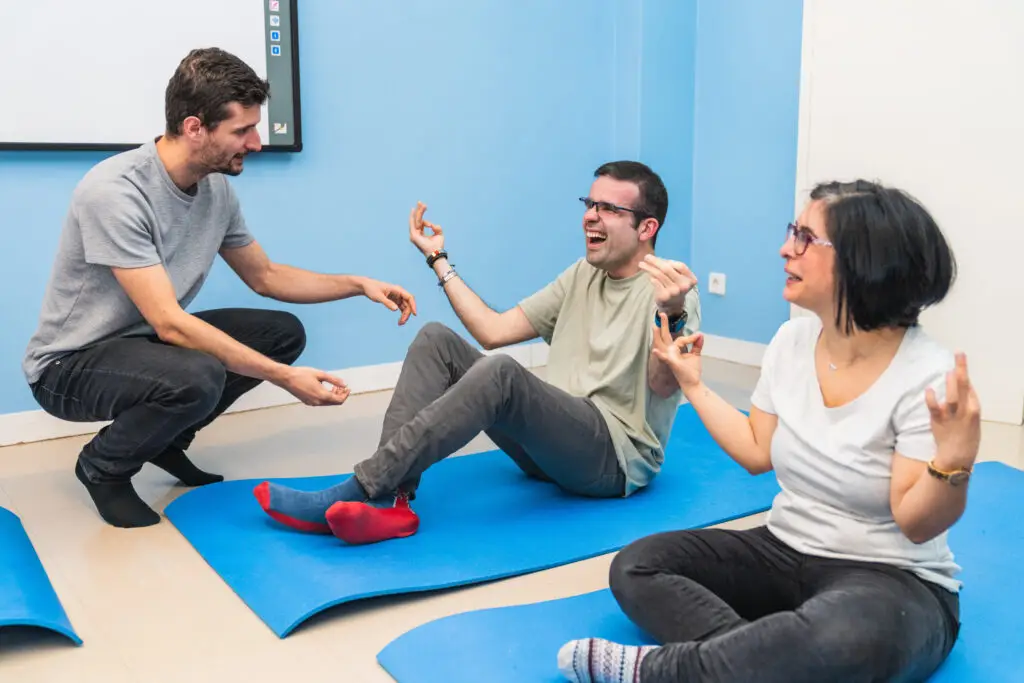
Our approach to mentoring is flexible, supportive, and participant-led. We focus on what matters most to you, blending emotional and practical guidance to build both soft and hard skills in a natural, everyday way.
Soft Skills
These include personality traits and personal attributes that enable you to interact more effectively and harmoniously with other people. Soft skills may come naturally but they can also be taught and developed over time.
Some examples of soft skills include;
Communication: Improving interpersonal skills for better relationships.
Time Management: Organizing tasks and responsibilities efficiently.
Adaptability: Navigating changes and challenges with resilience.
Problem-Solving: Developing strategies to overcome obstacles.

Hard Skills
These are competencies, skills, knowledge, and abilities which can be easily identified and measured. Hard skills are developed in order of relevance to the particular barriers a participant is facing, or the activity they wish to engage in. We prioritise the development of hard skills that are most relevant to the participants individual needs, barriers or intended activities. We encourage the use of accredited training bodies as required, and work with participants to facilitate cohesive learning experiences.
Some examples of hard skills include;
Financial Literacy: Managing budgets and understanding expenses.
Technology Use: Navigating computers and digital tools confidently.
Public Transport Navigation: Building independence in travel.
Daily Living Skills: Enhancing abilities for self-care and household tasks.
How NDIS Disability Mentoring Supports are Funded
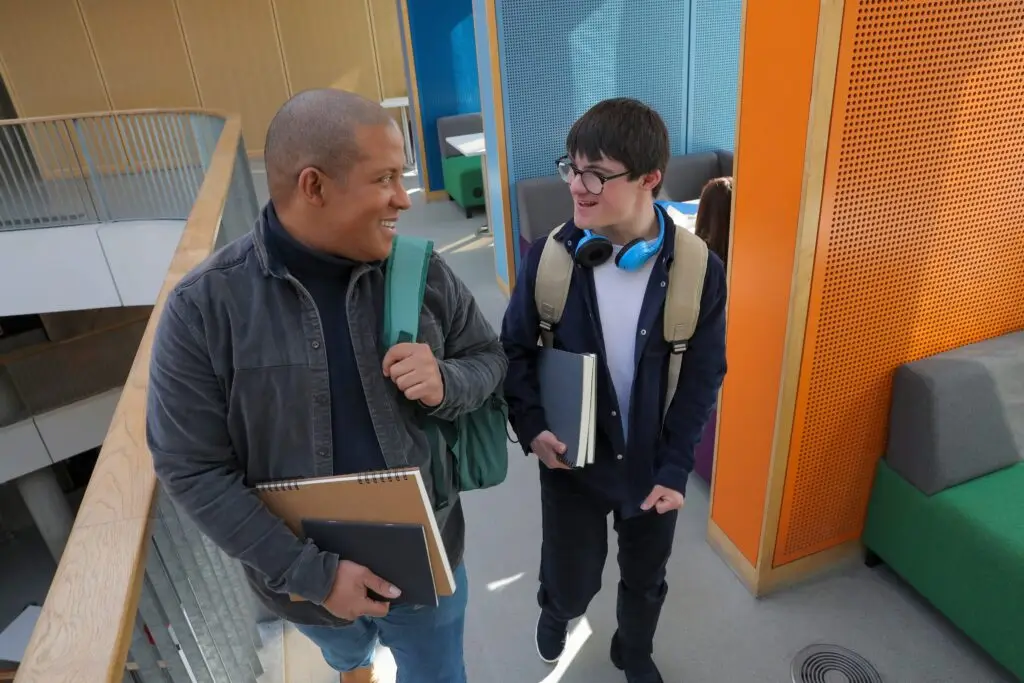
Our mentoring services can be funded under several NDIS Capacity Building categories, including Improved Daily Living, Increased Social and Community Participation, and Finding and Keeping a Job. We work with your support coordinator or plan manager to ensure that mentoring aligns with your plan and current pricing arrangements.
All services are provided in line with the NDIS Pricing Arrangements and Price Limits that are in effect at the time of service. We encourage you to confirm the most up-to-date information with your support coordinator or plan manager before commencing..
Our mentoring services align with various NDIS funding categories, including:
Capacity Building – Improved Daily Living: Enhancing skills for independence.
Capacity Building – Increased Social and Community Participation: Encouraging active engagement in community life.
Capacity Building – Finding and Keeping a Job: Supporting employment-related goals.
We collaborate with your support network to ensure our services complement your NDIS plan and other supports.
Please note: The line items referenced above are accurate according to the NDIS Pricing Arrangements and Price Limits in effect at the time of publication. However, the National Disability Insurance Agency (NDIA) may update or modify line items or pricing structures at any time. This is intended for informational purposes only and we recommend confirming current pricing arrangements with your support coordinator or plan manager.
Skill development requires dedication and commitment from everyone involved. We support participants to complete feasibility assessments as well as regular well-being evaluations. Good Company’s approach to mentoring integrates multiple activities and lifestyle elements to facilitate holistic wellbeing and effective learning to produce exemplary outcomes.
Nurturing Skill Development Promoting Wellbeing
At Good Company, we believe that mentoring is more than just guidance—it’s about walking alongside you as you work towards your goals. Our NDIS Mentoring service is designed to support you in developing both practical skills and personal growth, tailored to your unique journey.
We use a practical yet comprehensive approach to mentoring that focuses on the development of both hard and soft skills. Participants are encouraged to direct their own learning and development in line with what they feel is most beneficial to their individual circumstances. Good Company mentors assist in guiding their learning experience, and teaching participants how to identify, access and navigate tools and resources that support them to become increasingly self-sufficient.
Who Can Benefit?
NDIS mentoring is suitable for people at all stages of life who are looking to build confidence, strengthen independence, or make meaningful changes in their daily routines. It can be particularly helpful for people who are preparing for life transitions, developing new skills, or seeking to participate more actively in their community.
Whether you’re a young person building confidence for the first time, or an adult refining skills to live more independently, mentoring can help you move forward with purpose and clarity.
Our NDIS Mentoring service is ideal for participants who:
Are transitioning through significant life stages.
Seek to build independence and self-confidence.
Aim to engage more actively in their communities.
Desire support in setting and achieving personal goals.
Whether you’re a young adult preparing for employment or someone looking to enhance daily living skills, our mentors are here to support your journey.
When a peer mentor is available
Peer mentoring
Sometimes we can match you with a peer mentor: someone with lived experience of disability who shares the knowledge, skills and life lessons that worked for them. Peer mentoring is designed to complement your other supports, not replace them.
Peer mentors aren’t always available, so it depends on who is on our team at the time. Ask us when you get in touch and we’ll let you know what’s possible right now.
- First-hand insight: they have faced and overcome similar challenges.
- Non-judgemental support: they understand the ups and downs of the journey.
- Practical strategies: they share real-world solutions that worked for them.
- Inspiration and motivation: they show what is possible through lived experience.
Peer mentoring can often be funded through your NDIS plan under Capacity Building Supports – Increased Social and Community Participation, or Core Supports – Assistance with Social and Community Participation.
NDIS Mentors in Perth and Melbourne
Our mentors work in person across Perth and Greater Melbourne, including the Mornington Peninsula, and we offer online mentoring for participants in other states.
NDIS mentoring in Perth
Our Perth mentors support adults with disability across the metro area, from Joondalup to Mandurah. Mentoring often happens out in the community, at TAFE, at work, on public transport, at the gym or in local clubs, so you build skills where you’ll use them. Find out more about our Perth disability services.
NDIS mentoring in Melbourne
In Melbourne, our mentors support adults with disability across Greater Melbourne and on the Mornington Peninsula. We’re growing our Melbourne team, so tell us your suburb and we’ll check who’s available near you. See our Melbourne disability services.
Online mentoring
If you live outside our in-person areas, online expert support and coaching or our remote services can help you work on your goals by phone or video.
Meet our Perth mentors and our Melbourne mentors, or read about NDIS mentoring for social anxiety and psychosocial disability.
Choosing a Disability Mentoring Service
Not all disability mentoring services work the same way. When you compare mentor organisations for people with disability, look for:
- Goal-focused support. Mentoring should link to the goals in your NDIS plan, with a clear idea of what you’re working towards.
- The right match. A mentor whose interests, personality and communication style suit you.
- A plan to build independence. Good mentoring builds your skills and confidence so you need less support over time.
- Regular check-ins. Simple progress notes and reviews so you can see what’s working.
- Safe, trained mentors. Mentors who follow the NDIS Code of Conduct.
Read 5 ways mentoring builds independence and confidence, or see how mentoring builds NDIS life skills.
NDIS Mentoring FAQ
What is NDIS mentoring?
NDIS mentoring is a capacity-building support that helps participants develop confidence, independence and practical life skills. Mentoring focuses on building skills over time rather than doing tasks on behalf of the participant. It may include support with goal setting, decision-making, communication skills and navigating everyday responsibilities.
Can NDIS mentoring help with preparing for important appointments?
Yes. Mentoring can support participants to prepare for appointments such as Centrelink meetings, housing discussions, allied health sessions or job interviews. This may include planning questions, organising documents, practising communication strategies and building confidence before attending.
Can a mentor attend appointments with a participant?
Where appropriate and agreed upon, a mentor may attend appointments to provide support, encouragement and advocacy assistance. The focus remains on helping the participant build skills so they can gradually manage similar situations more independently over time.
Is mentoring suitable for participants who are shy, anxious or non-verbal?
Mentoring can be particularly helpful for participants who experience anxiety, social hesitation or communication challenges. Sessions are adapted to individual communication styles and may include gradual exposure to community settings, structured planning and strengths-based support.
Does mentoring support independent living goals?
Yes. Mentoring may support participants who want to build skills related to independent living, such as managing schedules, budgeting basics, communication with service providers, household planning and community participation.
Is mentoring one-on-one or group-based?
NDIS mentoring is typically delivered one-on-one to ensure personalised, participant-driven support. The focus is on individual goals, interests and pacing rather than pre-set group programs.
What NDIS funding categories can mentoring be claimed under?
Mentoring is generally aligned with Capacity Building or Core supports, depending on the participant’s plan and goals. Participants should confirm with their support coordinator or plan manager how mentoring aligns with their individual plan funding.
How is mentoring personalised?
Mentoring is guided by the participant’s goals, strengths and preferences. Sessions are flexible and designed collaboratively. The aim is to build long-term confidence, self-determination and practical skills that support everyday life.
Do you provide mentors for disabled adults, or only for young people?
Both. We support NDIS participants aged 6 and up, and many of the people we mentor are adults. Adult mentoring usually focuses on living more independently, work, money, travel and friendships, at a pace that suits you.
Do you offer disability mentoring services in Perth and Melbourne?
Yes. Good Company has in-person NDIS mentors across Perth and Greater Melbourne, including the Mornington Peninsula. If you live elsewhere, we can mentor you online by phone or video. Call 08 9334 6995 (Perth) or (03) 9069 7866 (Melbourne) to check who’s available near you.
Can a mentor help autistic adults?
NDIS mentoring is a capacity-building support that helps participants develop confidence, independence and practical life skills. Mentoring focuses on building skills over time rather than doing tasks on behalf of the participant. It may include support with goal setting, decision-making, communication skills and navigating everyday responsibilities.
Further reading
All articles- Learning gameMentor Match: how matching and our team workA free game: from your first hello to regular sessions with the team.Play the game
- Article5 Ways Mentoring Can Support NDIS Participants in Reaching Their GoalsHow a mentor helps you set goals, build skills and keep going.Read article
- ArticleWhat Does a Support Worker Do?Their role, what they can help with and how to get the right fit.Read article
- ArticleNDIS Goals Examples: 32 Goals You Can Adapt for Your PlanReal examples for daily life, work, study and community.Read article
Get in touch
Send us a message
Tell us a little about what you’re looking for and our team will get back to you. Prefer to talk? Call us on 08 9334 6995.
We only use your details to reply to you. See our privacy policy.