
Supported Independent Living (SIL) is the NDIS support that makes it possible for many adults with disability to live away from the family home with help around the clock. It’s also one of the most misunderstood parts of the scheme: what it pays for, who gets it and how it’s different from the house itself.
This guide explains SIL in plain English: what it is, what it covers and doesn’t, who it suits, how to ask for it and what to think about before choosing a provider. Part of our intellectual disability hub.
In short
- SIL pays for support staff who help you with daily tasks at home. It doesn’t pay for the house, rent or food.
- It usually suits people who need significant help each day and some support or supervision overnight.
- SIL can be in a shared home with housemates or, less often, in your own place.
- You ask for SIL through your plan, with evidence such as an occupational therapy report.
- If you need less support, Individualised Living Options or skill-building may suit you better.
What is Supported Independent Living?
SIL is help or supervision with daily tasks so you can live as independently as possible in your own home. Support workers help with things like:
- personal care, such as showering and dressing
- cooking, cleaning and laundry
- managing medication and appointments
- shopping, budgeting and paying bills
- building skills so you can do more yourself over time
- being there overnight, either awake or asleep on site.
SIL is funded from the Core supports budget in your plan, under Assistance with Daily Life. Under the 2026 reforms, SIL is one of the supports that must be delivered by a provider registered with the NDIS Quality and Safeguards Commission.
What SIL doesn’t pay for
This trips up a lot of families. SIL covers the support, not the home. You’ll still pay for:
- rent or board
- groceries and household bills
- phone, internet and personal costs.
Most people pay these from the Disability Support Pension, Commonwealth Rent Assistance and any wages. If the home is Specialist Disability Accommodation, the NDIS funds the building separately, and you pay a reasonable rent contribution.
Who is SIL for?
SIL is designed for people who need a high level of support at home every day. The NDIA generally considers it when someone needs significant help through the day and support or supervision overnight, and when living in a supported home is the best way to meet their goals.
For many adults with intellectual disability, especially those with moderate or more severe intellectual disability or complex behaviour support needs, SIL is the right fit. For others, it’s more than they need. People who mostly need help with planning, money and confidence often do better with fewer hours of targeted skill-building, or with an Individualised Living Option.
Ask yourself
Does the person need someone available at home most of the day and night? If the honest answer is “not really, they need help with a few things each week”, SIL may not be the right first step.
Shared and individual SIL
Most SIL is in shared homes of two to five housemates, with staff shared between residents. Support costs are shared too, which is how the NDIA keeps SIL affordable. Some people live on their own with SIL, but the NDIA will want to see why a shared arrangement wouldn’t work.
When choosing a shared home, think about compatibility as much as the building. Housemates’ ages, interests, routines and support needs all shape daily life.
How to get SIL in your NDIS plan
If you have support coordination in your plan, your support coordinator can do much of the legwork. Support coordinators often know which SIL providers have vacancies and can help you compare homes, housemates and rosters.
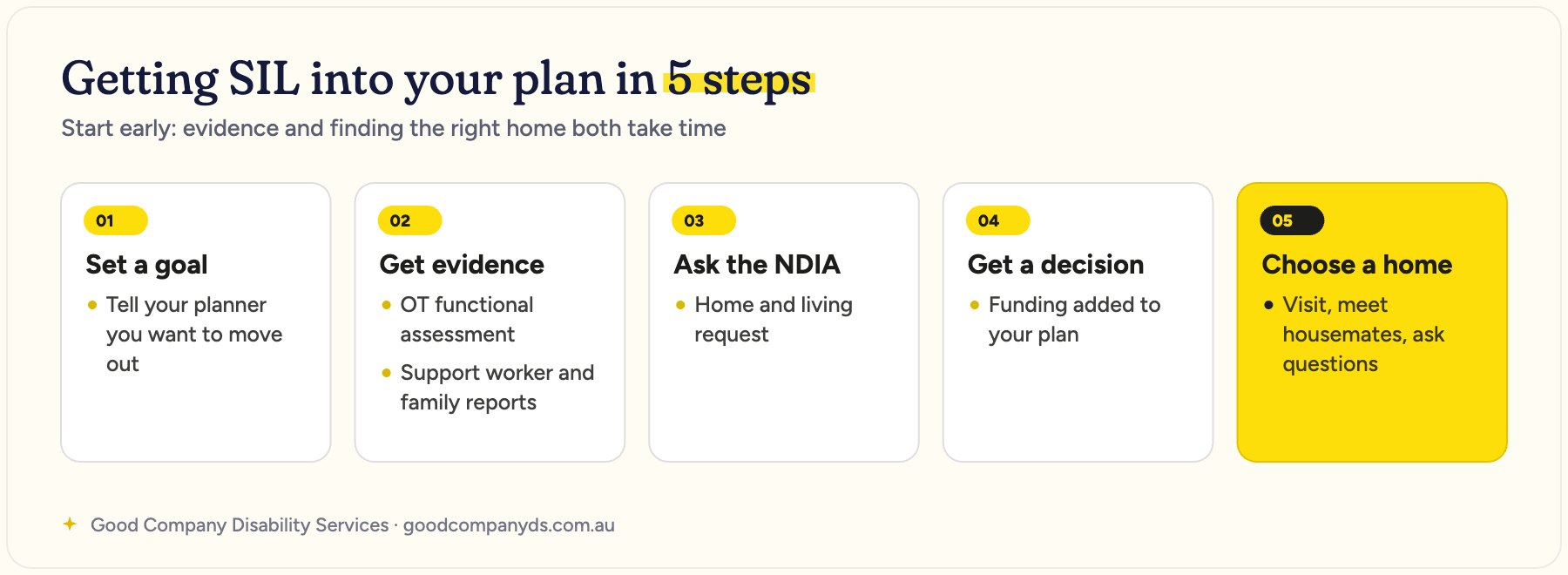
- Set a home and living goal. Tell your planner or support coordinator you want to explore moving out or changing where you live.
- Gather evidence. An occupational therapist’s functional assessment is usually essential. Add reports from support workers, behaviour support practitioners and family about the help needed day and night.
- Submit a home and living request. The NDIA uses a home and living supporting evidence form to decide which home and living supports are reasonable and necessary.
- Get a decision. If SIL is approved, funding is added to your plan, usually based on a roster of support for the home.
- Choose a provider and home. You can choose your SIL provider. Visit homes, meet housemates and ask lots of questions before you agree.
If SIL isn’t approved, you can ask for an internal review within three months. Our NDIS internal review guide explains how.
Questions to ask a SIL provider
- How do you match housemates?
- How many staff are on shift during the day, evening and overnight?
- Will I have regular staff who get to know me?
- How do you help residents build skills, not just get things done for them?
- How are complaints and incidents handled?
- What happens if a housemate arrangement isn’t working?
- How do you support residents to make their own decisions?
SIL and skill-building go together
Moving into SIL isn’t the end of building independence. The best SIL homes keep residents learning: cooking a meal, catching the bus, managing a bit of money. Outside the home, one-on-one mentoring can help someone keep their job, friendships and community activities through the change.
How Good Company fits in
Good Company doesn’t provide SIL. We provide one-on-one mentoring, which can help someone build the skills to move out, or keep their life outside the house going after a move to SIL. If you’re weighing up options, we’re happy to talk it through.
Thinking about moving out of home? Call or text 0480 804 282, email hello@goodcompanyds.com.au, or send us a message. We reply within one business day.
Supported Independent Living FAQs
Does SIL pay for rent?
No. SIL pays for support staff. Rent, board, food and bills are paid by the resident, usually from the Disability Support Pension, Commonwealth Rent Assistance and any income.
Can I choose my SIL provider?
Yes. You can choose any SIL provider with a suitable vacancy, as long as they’re registered with the NDIS Commission. You can also change providers, although it usually means moving house unless the home is separate from the provider.
What’s the difference between SIL and SDA?
SIL is the support. SDA, Specialist Disability Accommodation, is specially designed housing for people with very high support needs. Some people have both, but most people in SIL live in ordinary homes.
Can I get SIL if I have a mild intellectual disability?
It’s less common. SIL is designed for people who need high levels of support every day. If you mostly need help with planning, money and confidence, other options such as Individualised Living Options or skill-building may suit you better.
How long does it take to get SIL?
It varies. Collecting evidence, getting an NDIA decision and finding a suitable home can take months, so start planning early.
This guide is general information, not advice about your situation. NDIS rules change, so check ndis.gov.au or call the NDIS on 1800 800 110 before acting.